
Gay Sex In Media- Why So Popular?
- Posted on
- By L
Whether its Heated Rivalry or any of the storied BL manga that has lurked on the internet for decades, there’s no getting around it: we love when dudes get it on.
With the explosion of Heated Rivalry, everyone and their mom (maybe especially their mom) is getting into the gay hockey show where they show everything except the actual penetration. But don’t be fooled into thinking the cultural embracing of sexy gay media is that recent- many women and men-who-don’t-yet-know-they’re-women online have been singing the praises of gay media for decades.
WHY ARE THESE WORDS IN JAPANESE?
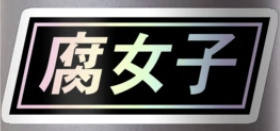
Let’s get into some terminology first. The agreed-upon term for gay male media that has a sexual/romantic edge to it is “yaoi” (pronounced ya-whee) which comes from Japanese fandom. Yaoi (やおい) is a Japanese genre of fiction focusing on romantic or sexual relationships between male characters, typically created by women for a female audience. It often emphasizes explicit content ("smut") over plot, distinguishing it from broader, more romantic "Boys' Love" (BL) media. The term originated in the 1970s as a self-deprecating acronym for "no climax, no point, no meaning" (yama nashi, ochi nashi, imi nashi). A contrast would be Yuri (Japanese: 百合; "lily"), often known as “Girls' Love” (GL), a Japanese genre focusing on emotional, romantic, or sexual relationships between female characters. While spanning intense platonic friendships, it frequently features lesbian romance, varying from soft, emotional stories to explicit narratives. These words rose to prominence on the English-speaking internet because of the Western co-opting and embrace of Japanese anime and manga content. So much readily accessible queer media was available from Japan at a time when Western queer media was not (and still isn’t) even close to competing. These terms have both been extrapolated and de-loaded from their original almost self-deprecating or judgmental context and watered down by the wider internet to just mean “any gay content about men” and “any gay content about women”. In much the same way “rawdogging” as a term means having sex without a condom, though is now thrown around at board meetings and in work settings to mean doing anything unassisted, yaoi and yuri have had similar de-fangings in current Western culture. Additionally, originally an insult, the word “fujoshi” also comes from Japanese fandom. Fujoshi (腐女子, "rotten girl") is a Japanese term for female fans who enjoy manga, anime, and novels featuring romantic or sexual relationships between male characters (essentially, who engage with yaoi). Coined on Japanese 4chan, it is a self-deprecating pun on a term for "ladylike girl," implying they are "fallen" or "rotten" for having "disturbing" interests. This too has undergone a defanging in the Western world, not even really being a female-exclusive term anymore. Taken out of its moral purity context and divorced from its roots in shame, fujoshi has become a term used far and wide to mean “a big fan of yaoi” (the inverse is “Himejoshi” for fans of yuri). You will, in the modern day, see people proudly proclaiming themselves fujoshis or fujos regardless of gender, and talking about how they are fans of yaoi, even when nothing in the equation is remotely involved with Japan.
SO… IT’S WOMEN?
Like, sort of? There is, of course, lots of gay media made for the people they are depicting. However, a lot of specifically gay male media is made with the female gaze in mind- the men are gentler, less crass, more beautiful, think/talk about their feelings more. In many ways, yaoi is a vessel for the disillusioned woman to explore her own desires for equitable male love and companionship, something that is only possible when you remove the fact that they are women in the first place from the equation. The queer aspect is the stand-in for the adversity of womanhood, and the slightly more expressive world makes for a perfect sound stage upon which to explore that you are allowed to be a desiring force. It additionally paves the way for many transgender men to realize that they are in fact men- seeing their desires on a page or a screen and feeling the ache of being unable to experience a world in which they could fulfil those desires in their current form. This is not all to say that gay media is built on the back of fetishizing gay men- the embracing of gay media by women does not equate to the real-world oppression of gay men, OR AT LEAST IT SHOULDN’T. Of course there will always be terrible people who use their interests as excuses to say and do terrible things- but this is not indicative of a wider issue with yaoi specifically. There have been many arguments, one such being “imagine if men were treating lesbians like this!” and it’s like… they do. Far worse in fact. If you need a microcosm of proof, how’s this: when you search “gay” in regular Pornhub, it redirect you to gay Pornhub, which is exclusively men having sex with one another. When you search “lesbian” in regular Pornhub, it stays on straight Pornhub and populates the search results with a glut of lesbian pornography catered exclusively to the male gaze. It is for reasons like this I find it hard to care when people try to claim that fujoshi behaviour is in any way actually harmful. These gay men are fictional characters, often not live action, written by an author as wish fulfilment for a societal metaphor. “Gay” is an Ao3 tag. “Lesbian” is a porn category.
“IN MY WILDEST DREAMS I’M NOT THERE AT ALL”
In his 2023 novel Idlewild, author James Frankie Thomas writes the following excerpt:
I was fourteen when my father’s twelve-step friend Gareth took up residence, temporarily and then indefinitely, on the living room couch. A film buff, Gareth often commandeered the television to watch movies. One evening he rented Velvet Goldmine (1998, dir. Todd Haynes). I happened to enter the living room just in time to catch the eighteen-second kiss between Jonathan Rhys Meyers and Ewan McGregor, and I was instantly mesmerized with something almost closer to religious awe than sexual arousal. Gareth noticed and rewound the tape so we could watch the whole film together. After that night, he took it upon himself to introduce me to gay cinema. The curriculum eventually expanded to include the pornographic, and one night my father wandered into the living room during an onscreen blowjob. “Fay,” he said, “what do you get out of this?”
“Why do straight boys like lesbian porn?” Gareth countered. “Same thing. She wants to join in.”
I appreciated Gareth coming to my defense, but he was mistaken: the idea of joining in had never once occurred to me in the hundreds of hours I’d spent in contemplation (via film, fanfiction, or fantasy) of two dudes doing it. “No,” I said. “I don’t want to join in.”
“Interesting,” my father said. “So in your wildest dreams, you’re merely a voyeur?”
That wasn’t quite right, either. “No,” I said. “In my wildest dreams, I’m not there at all.”
It’s not about a fetishization, nor is it about a commodity- it’s a grasp towards the ephemeral, an attempt to conquer a part of yourself that wants to be someone else. And sometimes that’s through witnessing that which you could never be act out that which you covet.
Or like. Whatever.
Find Strap-On Harnesses at the Art of Loving HERE
Find Packers at the Art of Loving HERE