
TPR vs Silicone
- Posted on
- By L
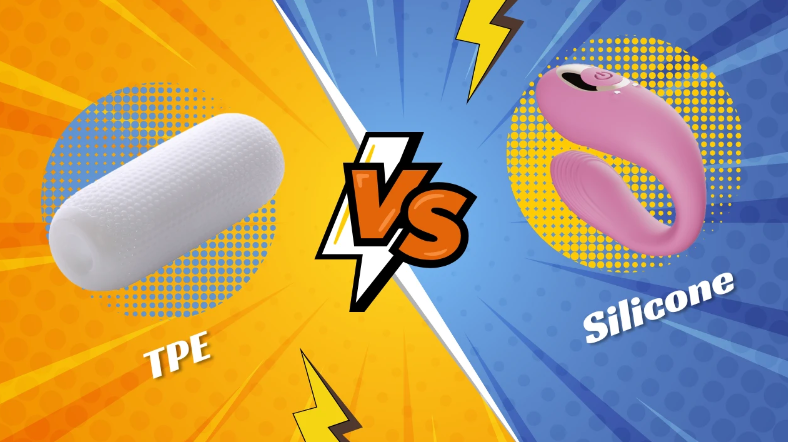
The two main materials that sex toys are made out of- what’s the difference and why does it matter?
You’ve probably heard sex toys boasting about being made of “100% silicone” and have likely wondered why you should care about that. Plastic is plastic, right? WRONG! Many plastics are quite different and hold many different qualities, down to even which ones are safe to put inside your body and which ones are not.
WHAT IS TPR?
TPR (Thermoplastic Rubber) is a versatile synthetic material that combines the stretch and flexibility of traditional rubber with the easy-molding properties of plastic. With high elasticity, it stretches like rubber and bounces back to its original shape. Unlike regular rubber, it melts when heated and hardens when cooled without chemical changes, making it simple to shape. It also resists weathering, chemicals, and impact very well, making it quite durable. It’s also a high-porosity plastic, which means that it’s a little more likely to trap bacteria, and has a shorter lifespan than some other sturdier plastics.
WHAT IS SILICONE?
Silicone is a synthetic, rubber-like polymer made from a hybrid chain of alternating silicon and oxygen atoms with attached organic groups. It starts with silica (silicon dioxide), which comes from quartz sand, and unlike regular plastics that have a carbon-only backbone, silicone features an inorganic silicon-oxygen backbone bonded with carbon and hydrogen side groups. It withstands extreme temperatures ranging from freezing cold up to over 250°C (480°F) without melting or cracking. Similar to TPR, it bends, stretches, and twists easily while bouncing back to its original shape, but as a low-porosity plastic, it is mostly non-reactive, biocompatible, and does not support bacterial growth easily.
WHAT TOYS ARE MADE OF WHAT AND WHY?
Sex toys made of TPR and silicone differ primarily in porosity, safety, and texture. Sex toys made of TPR are often budget-friendly or highly squishy products, such as realistic dildos, masturbator sleeves (male strokers), realistic sex dolls, and cushiony or flexible novelty items. TPR is used instead of silicone for these kinds of toys mostly for its ultra-soft realism, as TPR mimics human skin softness and bounce better than nearly any other plastic. And, due to its low melting point and easy shaping, it is inexpensive and easy to melt and pour/inject into complex molds. The main drawback, is, of course, its porosity, developing microscopic cracks harbor bacteria. Additionally it degrades over time, requiring a condom during use for internal/penetrative TPR toys. Never put something made of TPR inside you longterm without a condom! That’s a recipe for a yeast infection.
On the flipside, sex toys made of silicone include premium vibrators and suction toys, rabbit vibrators, insertable dildos, anal beads, and flexible or waterproof insertables. Smooth medical-grade silicone in non-porous and body safe, meaning it has zero pores, resists bacteria, and can be easily sterilized. It also resists aging, heat, and wear, lasting for years without becoming sticky or breaking down. It’s firm, but still flexible, holding intricate shapes while remaining soft and compatible with all water-based lubricants. It’s nowhere close to the softness and squishiness that you’ll get with TPR, but it’s a hell of a lot stronger and safer!
Overall, the shorthand that I like to keep in mind is that if the toy is gonna go in you, it should be made of silicone, and if you’re gonna go in the toy, it can be made of TPR. If a TPR toy is gonna go in you, consider putting a condom over it first. And if you’re gonna go in a silicone toy… I mean frankly there’s no problem with that, you might just wanna use a little extra lube.
Happy plastic-hunting!